
Your long distance moving cost comes down mostly to two things: how much your shipment weighs and how far it’s going. Added services like packing and storage come next, followed by the time of year, any specialty items, and how easy or hard it is to get things in and out of both homes. I won’t put a price in a blog post, because any number given without seeing your home is a guess. What I can do is explain what moves the bill up or down, so you know what you’re looking at when an estimate lands in your inbox.
Weight and distance do most of the work
Across town, moves are usually priced by time and crew size. Once your move crosses a state line, the math changes. Interstate moves are generally priced mainly on the weight of the shipment and the distance it travels, plus the services you add.
Distance is simple. Colorado Springs to Kansas City is a shorter haul than Colorado Springs to Charlotte, and that shows up in the cost. You can’t do much about it once you’ve taken the job or bought the house.
Weight is where you have real control. A shipment is weighed, and every box of old tax returns, every spare bookcase and every set of weights in the garage adds to it. Families are often surprised by how much the small stuff adds up. Books, tools, canned goods and hobby supplies are heavy for their size, and they hide in closets and basements where nobody counts them during the first walkthrough.
Packing, specialty items and access
Packing is labor and materials, so having a crew pack your whole house costs more than packing it yourself. That said, I’d rather you spend money where it protects you. Our packing services can cover the whole home or just the hard parts, like the kitchen, mirrors, artwork and anything fragile. A lot of families pack their own books, linens and clothes and leave the breakables to us. That split usually makes sense on a long move, where things ride on a truck for days instead of an hour.
Specialty items take extra time, extra equipment or custom crating. Pianos, large glass tabletops, oversized TVs, marble and antiques all fall into that group. Tell us about them during the estimate so they’re planned for and priced in, not discovered on loading day.
Access matters at both ends. A ranch house with a driveway right up to the front door is quick to load. A third-floor condo with a long walk to the truck, a tight stairwell or an elevator you have to reserve takes longer, and so does a house at the end of a narrow street where the truck can’t get close. If the new place has access issues, mention those too. We plan for both homes, not only the one we can see.
Time of year and storage days
May through August is the busiest stretch of the year. Military PCS season overlaps with summer family moves, schools let out, and everyone wants to be settled before fall. Demand is high, trucks and crews are booked, and dates fill early. Fall and winter usually offer more open dates and more flexibility. If you have any say in your timing, moving outside the summer rush is one of the easiest ways to make things simpler.
Storage is the other piece that changes over the course of a move. If your new home isn’t ready when your old one has to be empty, your things need somewhere to wait. Storage adds to the bill, and the cost follows the actual number of days your things are stored. A delay of a week or two on a closing can turn into real money. I’d rather you know that going in than be surprised by it later.
Why a survey beats a quick online quote
An online form that asks how many bedrooms you have can’t see your garage. It doesn’t know you have a piano, a basement full of tools or a second-floor walkup at the other end. It hands you a number that looks nice and has very little to do with your actual move.
Interstate movers are required to give you a written estimate based on an actual or virtual inspection of your things. A rate quote is not an estimate. When we survey your home, we walk through every room, open closets, look at the garage and the basement, and ask about the things you plan to sell or leave behind. That’s how an estimate gets close to what you’ll actually pay.
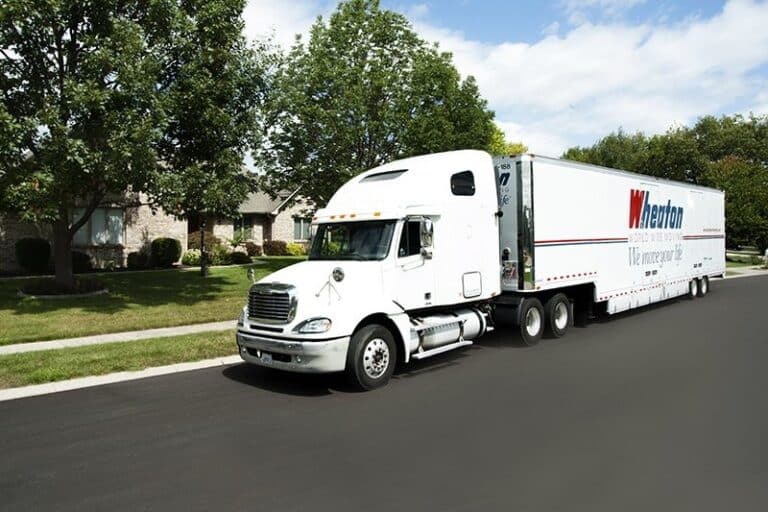
It also matters who is giving you the number. Some companies selling long-distance moves online are brokers who pass your job to another carrier. When you book a long-distance move with 5 Star, our own local team plans, packs and loads your home, and as the Colorado Springs agent for Wheaton World Wide Moving, we turn the shipment over to Wheaton’s nationwide network to carry it to your new state. If you want to understand that difference better, my post on moving brokers versus moving companies lays it out.
Binding and non-binding estimates
On an interstate move, you’ll see one of two kinds of estimates.
A binding estimate guarantees you won’t pay more than the estimated amount at delivery. If you add items or services after the estimate is written, the mover prepares a new binding estimate that covers them. That keeps everyone honest. You can’t add a garage full of furniture and expect the old number to stand, and the mover can’t spring a higher bill on you for the same shipment.
A non-binding estimate is not a guarantee. Your final cost depends on the actual weight, the services provided and the mover’s tariff. There is a protection built in, though. The mover cannot require you to pay more than 110 percent of the non-binding estimate at delivery.
Your mover should also give you the FMCSA booklet “Your Rights and Responsibilities When You Move.” It covers all of this in plain language and is worth a read before you sign anything.
How to bring the cost down
You have more control over the final bill than most people think. These are the steps I’d take:
- Declutter before the survey, so the estimate reflects only what you’re taking
- Pack the sturdy, simple things yourself and leave the fragile pieces to us
- Move outside May through August if your schedule allows
- Stay flexible on dates, especially around the end of the month
- Line up your closing and delivery dates carefully so storage days stay low
One honest note before you go. Your final bill follows the actual weight of what we load and the actual number of days anything spends in storage. If you decide to bring the garage after all, or your new home isn’t ready for an extra two weeks, the bill will reflect it. That’s how long-distance moving is priced, and I want you planning with it in mind from the start.
If you’re weighing a move out of Colorado Springs and want a number you can actually plan around, let us come take a look. Our estimates are free and come with no obligation, and you can schedule yours here. I’ll make sure every line on it makes sense to you before you decide anything.
– Melysa