
The best way to handle a move out of state is to start about eight weeks ahead and take it in order: get written estimates and check your mover first, then cut down what you own, plan your packing, move your records and utilities, and get ready for delivery. Below is the week-by-week moving out of state checklist I give families leaving Colorado Springs. Your dates may shift, but the order holds up.
Eight weeks out: estimates and checking your mover
Everything else hangs on this step, so start here. Ask two or three movers to look at your home, either in person or on a video walkthrough. An interstate mover is required to give you a written estimate based on an actual or virtual inspection of your things. A price someone gives you over the phone after asking how many bedrooms you have is a rate quote, and a rate quote is not an estimate.
When the estimates come in, look at whether each one is binding or non-binding. A binding estimate means you won’t pay more than that amount at delivery (if you add items or services later, the mover writes up a new binding estimate). A non-binding estimate is a good-faith figure, and the final cost follows actual weight and services, but the mover can’t require you to pay more than 110 percent of it at delivery.
Then check each company’s USDOT number. Every interstate mover must have one, and you can look it up on the FMCSA website to confirm the company is real and registered. Ours is 70719. Your mover should also hand you the FMCSA booklet called “Your Rights and Responsibilities When You Move.” Read it. It’s written in plain language and it explains what you’re entitled to.
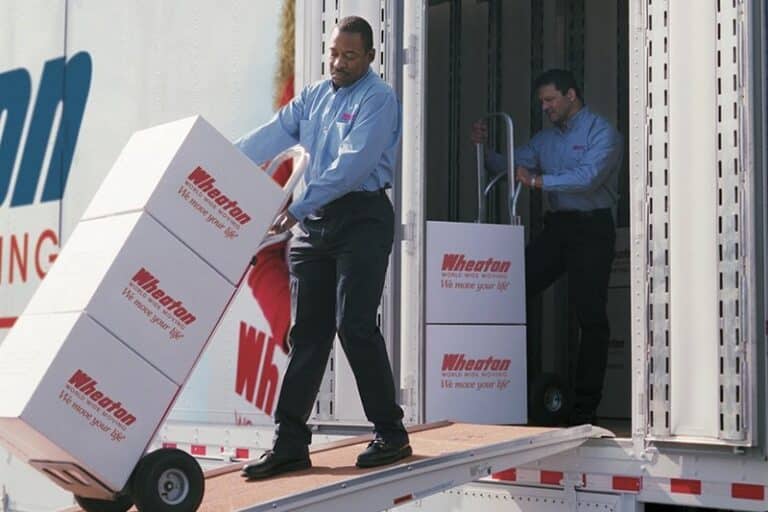
A word on who you’re actually hiring. When you book a long-distance move with us, our own team plans, packs and loads your home here in Colorado Springs, and as the local agent for Wheaton World Wide Moving, we hand the shipment to Wheaton’s nationwide network to carry it to your new state. There’s no broker in the middle selling your job to whoever is cheapest that week.
This is also the week to start a moving folder, paper or digital. Estimates, the booklet, your inventory, school forms and receipts all go in it. You’ll reach for it constantly.
Six weeks out: inventory and declutter
On a long-distance move, you pay mainly by weight and distance. You can’t change the distance. You can change the weight, and the earlier you start, the more you’ll actually let go of.
Walk the house room by room, including the garage, the crawl space and that shelf in the basement nobody looks at. Sort things into keep, sell, donate and toss. Be honest about the heavy stuff: old exercise equipment, a second set of patio furniture, boxes of paperwork you could scan. Bulky items that are cheap to replace are usually not worth hauling across the country.
If you can finish most of your decluttering before your estimate visit, even better, because then the estimate reflects what you’re really taking. Take photos of anything valuable as you go. They’ll help with your inventory now and with any questions later.
Four weeks out: a packing plan, plus school and medical records
Decide who is packing what. Some families have us pack everything, some pack it all themselves, and plenty land in between, where our crew handles the kitchen, the artwork and the fragile pieces while the family packs books, clothes and linens. Our packing services can be set up for a whole house or just the rooms you’d rather not tackle.
If you’re packing yourself, start with the rooms you use least: guest rooms, storage, out-of-season clothes. Label every box with the room it’s going to and a few words about what’s inside. For a long move, pack a little heavier on padding than you would across town, since your things will be on the road longer. My earlier post with tips for cross-country moves from Colorado Springs goes deeper on this.
This is also the week for records. Call your kids’ schools and ask how they handle withdrawal and records transfer, then contact the new district about enrollment and what documents they’ll want. Ask your doctors, dentist and vet for copies of records, and get prescriptions refilled so you have enough to bridge the gap until you find new providers.
Two to three weeks out: utilities, address and vehicles
Schedule your utilities to shut off the day after you move out, not the day of. You’ll want lights and water while the crew is loading and while you clean. Inside city limits, Colorado Springs Utilities handles electric, natural gas, water and wastewater, so one call covers most of it. If you live outside the city, your providers may be different, so check by address. Then set up service at the new home so the lights are on when you walk in. Internet takes the longest to schedule in a lot of places, so book it early.
File your change of address with USPS, then work through the list of people who send you mail or money: banks, credit cards, your employer, insurance, subscriptions. It’s tedious. Do a few each evening and it’s done in a week.
Decide what’s happening with your vehicles. Most families drive at least one car to the new state, and some ship a second one. Either way, make that plan now so it isn’t a last-minute scramble.
The last week: confirm everything and pack a first-night box
Confirm your dates with us, and walk through anything that has changed since the estimate. Added a piano? Decided to leave the treadmill? Tell us now. If your estimate is binding and you add things, we’ll write up a new one so there are no surprises at delivery.
Pack a box or a suitcase for each person that travels with you, not on the truck. A good first-night kit includes:
- Medications, phone chargers and a few days of clothes
- Sheets, pillows and a towel for each person
- Toilet paper, soap, a roll of paper towels and basic cleaning supplies
- A box cutter, a few tools and a flashlight
- Important documents, jewelry and anything you couldn’t replace
- Snacks, water, and the coffee maker if your mornings depend on it
Empty and defrost the fridge a day or two ahead, drain gas from lawn equipment, and set aside anything you plan to carry in your own car so it doesn’t get loaded by mistake. I suggest a closed bathroom or a closet with a sign on the door that reads “Not moving.”
Moving day and the delivery window
On loading day, be there or have someone there who can make decisions. The crew lead will walk through with you, go over the inventory, and ask about anything fragile or unusual. Before the truck leaves, read the paperwork, make sure you understand it, and keep your copies in that moving folder. Do a final walk through every room, closet and cabinet.
On most interstate moves, delivery is scheduled within a window of days rather than one fixed date, and we’ll go over yours with you before the truck leaves. Plan your drive and your first nights around it. Make sure we have a phone number that will reach you on the road and at the new house. When the delivery crew arrives, check items off the inventory as they come in and note any damage on the paperwork before you sign.
After you arrive
Your new state has its own rules for transferring your driver license and registering your vehicles, and the deadlines can be short. Look them up on that state’s DMV website during your first week so you aren’t paying a late fee for something you didn’t know about. Update your voter registration, find new doctors, and get the kids settled into their routines as soon as you can.
If you’re starting to plan a move out of Colorado Springs, I’d be glad to help you get the first step right. Our estimates are free and come with no obligation, and you can request yours here. We’ll walk through your home, explain every line, and give you a plan you can actually follow.
– Melysa